
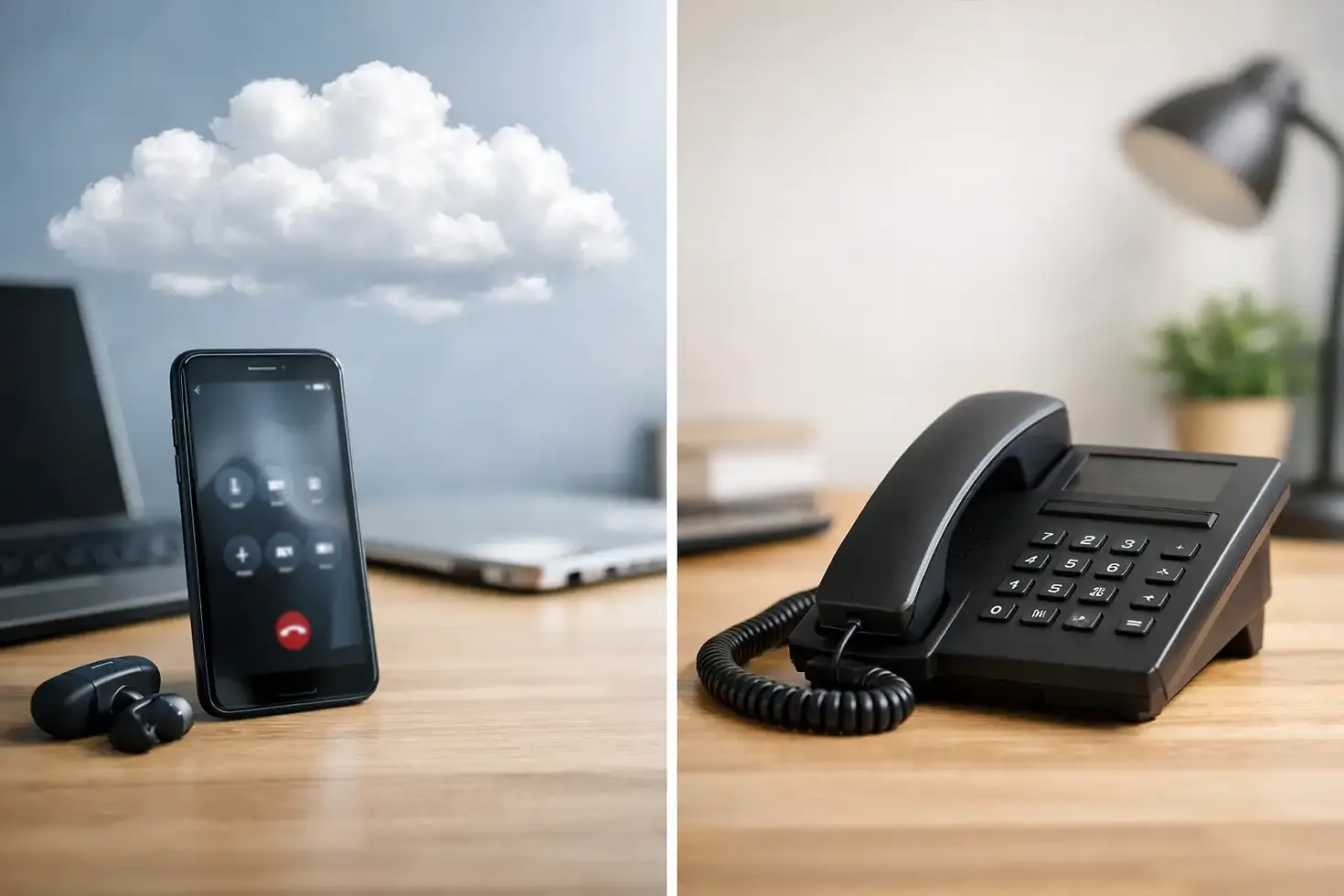
Cloud Phones Versus Landlines for Small Business

A phone system decision usually becomes urgent when something changes: the old system needs repair, a carrier raises rates, employees begin working from different locations, or an office move is on the calendar. When comparing cloud phones versus landlines, the right answer is not automatically the newest option. It is the option that gives your business dependable calling without forcing you to pay for features, hardware, or complexity you will not use.
For many small businesses, cloud phones are the better fit because they support office phones, mobile calling, and business continuity from one system. But traditional landlines still have a place, especially where simplicity, existing equipment, or specific analog needs matter. A clear comparison starts with how your team actually works.
What Is the Difference Between Cloud Phones and Landlines?
A traditional landline uses a physical phone line delivered to your location. It may be a basic single line, a group of lines shared by an office, or part of an older on-premises PBX phone system. Calls are tied closely to the building and the wiring already in place.
Cloud phone service, often called hosted VoIP, sends calls over an internet connection. The phone system itself is managed in a secure data center rather than sitting in a phone closet at your office. Employees can use desk phones, a mobile app, or a computer app while keeping the same business number and extension.
That distinction affects more than call quality. It changes how easily you can add employees, route calls, support remote staff, and recover when your office is unavailable.
Cloud Phones Versus Landlines: The Practical Differences
Mobility and working outside the office
A landline is designed around a physical location. If a receptionist steps away from the desk, the call usually stays at the desk unless the system has call forwarding configured. If the office closes unexpectedly, someone may need to forward lines manually or rely on voicemail.
Cloud phones make it easier to answer business calls from wherever authorized employees are working. A customer can call the main business number, reach an auto-attendant menu, and be sent to an extension that rings on a desk phone and mobile app. The customer sees one professional business identity rather than an employee's personal cell number.
This does not mean every business needs a complicated collaboration platform. A two-person office may only need a main number, two extensions, voicemail, and mobile access. A larger team may also benefit from chat, meetings, file sharing, call queues, and detailed call handling. The key is choosing the level of service that fits the work, not buying an oversized package because it sounds modern.
Features and call handling
Basic landlines are dependable for straightforward calling, but their feature set is limited. Adding extension dialing, an automated greeting, ring groups, call reporting, or after-hours routing can require an on-premises phone system, additional hardware, programming, and service visits.
Cloud systems commonly include these capabilities as part of the service. A caller can hear, “Press 1 for sales, 2 for service,” then be routed based on office hours or staff availability. Calls can ring a group, overflow to another employee, or go to a shared voicemail box. Changes are usually handled through a portal or with help from your provider rather than a hardware replacement.
That flexibility is especially useful for organizations that expect to grow, add locations, or want coverage when a key employee is out. It also helps a small business present itself professionally without building a large phone infrastructure.
Costs that are easy to miss
The price of a phone system is not just the monthly service charge. With landlines, businesses may pay for individual lines, long-distance plans, maintenance, repairs, aging PBX hardware, and technician visits when changes are needed. An older system can seem inexpensive until it needs a card, handset, or part that is difficult to source.
Cloud phones generally use a predictable monthly cost per user or extension. There may also be one-time costs for desk phones, setup, network improvements, or number porting. If your internet service is weak, improving it should be part of the budget rather than an afterthought.
Neither model is always cheaper on paper. A very small office with one line and no need for mobility may find traditional service perfectly reasonable. A business with several employees, multiple call paths, or frequent changes often finds cloud service more cost-effective because it avoids separate lines and reduces the cost of system changes.
Ask for pricing that clearly separates monthly service, equipment, installation, taxes and fees, and any contract terms. If the quote is difficult to understand before you buy, support and billing may be difficult to understand afterward.
Reliability and outage planning
Traditional landlines have a long-standing reputation for reliability. In many cases, basic analog lines can continue working during a local power outage because the line supplies power to a simple corded phone. That remains a real advantage for certain locations and emergency-use phones.
Cloud phones depend on your internet connection and local power. If both go down and there is no backup plan, desk phones at the office may stop working. However, cloud systems can offer options landlines cannot: calls can be redirected to mobile apps, another location, voicemail, or an answering service. A short internet disruption does not always mean customers hear a dead line.
The best approach is to plan for the outages most likely to affect your business. A battery backup and properly configured network equipment can protect against brief power interruptions. A secondary internet connection may make sense for an office that handles a high volume of time-sensitive calls. For businesses with safety, elevator, alarm, fax, or specialized analog equipment, keep those requirements separate from the general office phone decision.
Growth, moves, and administration
Landlines can be a comfortable choice when nothing is changing. But moving locations, adding extensions, or opening a second office may require new wiring, carrier scheduling, and changes to an existing PBX.
Cloud systems are built to be more adaptable. Adding a user, changing an extension, updating an auto-attendant, or moving a desk phone is typically much simpler. Your phone number can usually move with you, subject to standard porting and service availability requirements. That flexibility can matter as much as the monthly rate when an office lease ends or staffing changes quickly.
When a Landline Still Makes Sense
A landline may be the practical choice if your needs are truly basic: one or two phones at one fixed location, minimal call routing, and no expectation that employees will answer remotely. It can also be appropriate for dedicated analog devices or as a backup path where uninterrupted voice access is critical.
Some businesses also have a functional on-premises system with familiar handsets and no immediate need to change. Replacing it simply because it is older is not always wise. The better question is whether replacement parts, service support, and carrier costs remain reasonable - and whether the system is holding the business back.
When Cloud Phones Are Usually the Better Fit
Cloud service is often a strong choice when calls need to follow people rather than desks. It is well suited to offices that want a main number with extensions, automated menus, call groups, remote coverage, multiple locations, or clearer control over how calls are handled.
It can also make sense for businesses replacing an aging PBX. Instead of investing heavily in equipment that stays in one office, the business can use a hosted system that is easier to adjust as needs change. A provider should help you decide whether you need simple hosted phone service or a broader unified communications setup. Those are different needs, and they should not be treated as the same sale.
Make the Decision Based on Your Call Flow
Before comparing plans, trace a typical customer call. Where does it enter? Who answers it? What happens at lunch, after hours, during a snow day, or when the office internet is down? Then consider which employees need to use a business number from a mobile phone and which devices, if any, require a traditional analog line.
Those answers make the choice much clearer than a feature list ever will. A straightforward phone system should support the way your business serves customers, explain its costs plainly, and leave room to grow without making a simple call feel like a technical project.


Comments